Please do not copy any photos without permission( click on photos to enlarge)

Tuesday, 14 January 2014

One down......


January 13th


Clean up time again, this particular site is very satisfying but cleaning the nest box is always approached with a certain trepidation, to get to it I have to climb 384 steps, I know I count them to pass the time on the way up. Approaching 57 now I am not the man that I once was, my body tells me this daily but I look at it that it is a necessary evil and the exercise is doing me good. It’s hard to think that way when you’re on step 296 and you’re gasping for breath, this could be down to the large bag of substrate on my shoulder though….

It gives me immense satisfaction to know that the nest box has made the difference, it make every step worthwhile, this particular pair have now used it for the last 3 breeding seasons, prior to this they failed due to exposure and egg rolling.

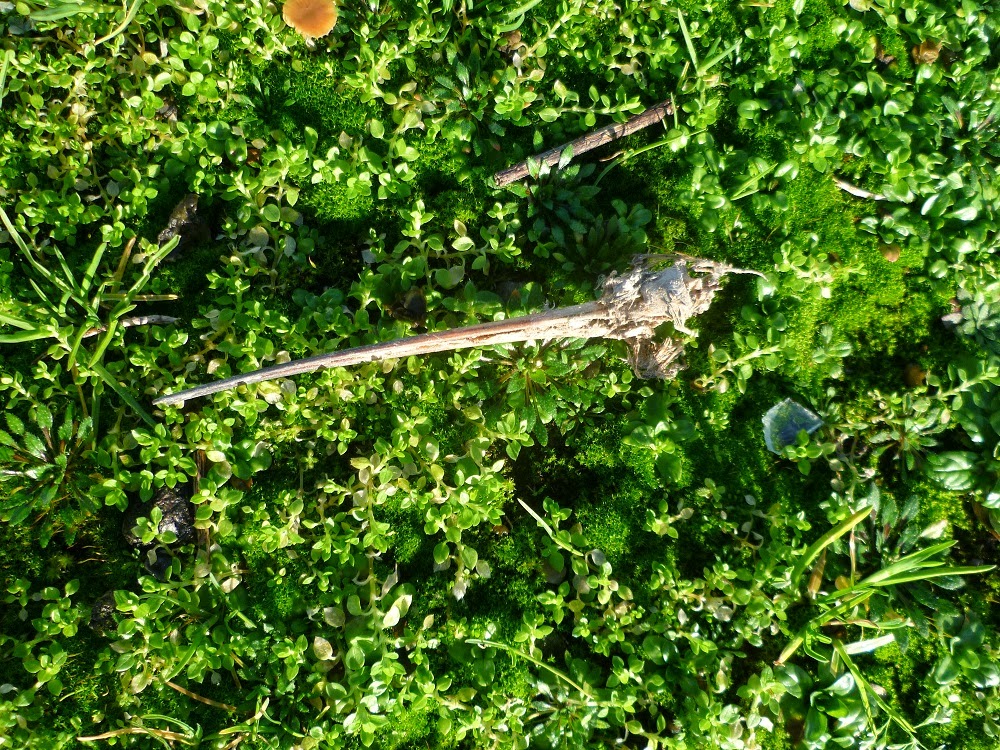
Eventually arriving at the nest box I firstly checked the area for prey, I was not expecting too much as this is a pair that don’t hold to the site after breeding and I had already checked it in the Autumn. A couple of feral pigeons including a fresh one but also present were 2 Moorhens and the upper mandible bill of a Black Tailed Godwit, Ed will confirm this hopefully, the only other possibility would be Snipe or perhaps a Bar Tail.


Moorhen 

Looking at it again possibly lower mandible of Black Tailed Godwit

The Moorhens I suspect are evidence again of nocturnal activity, like Coot they do tend to move round in darkness, it is not a bird you see flying around diurnally, only perhaps flushed and flying low from a point A to B.

The box itself showed she had already been busy, a large ‘scrape’ had already been made in preparation for egg laying, the rest of the box appeared surprisingly clean, I expect this was down to the recent gale force winds. None the less I gave it a scrub and put some fresh substrate in and also made her a new ‘scrape’ she will no doubt modify this to suit herself.

Before with scrape, surprisingly clean


After - substrate ramped up outside to allow for chicks going for walkies, from 10 days old they are pretty mobile

I had picked a good day, very cold up this high but wall to wall sunshine, amusingly both Falcon and Tiercel were sitting not a 100 metres from me together watching the proceedings, early days yet but there on territory.

Fingers crossed for another good year, they produced 4 juveniles in 2013.

Tuesday, 7 January 2014

Here we go again


Another year, another breeding season, it comes round so quick; will it be as productive as last year? I certainly hope so, 2013 for me was my best year yet.
With the arrival of January my thoughts turn to cleaning out the Nest Boxes and Trays, as you know peregrines are not house proud, it is essential that the boxes are scrubbed out and substrate replaced to remove the risk of parasites.

As it stands I have 5 Nest Boxes and 2 Trays to clean out, all were successful last year and they are a mess, some have been in position for 4 years and they may also need weatherproofing, you only have to look at the weather these days to see why.
If there is a ‘ natural ‘ overhang on the site I will always try to use a tray, 2 as above have this but where not available I always place a nest box. Our weather is changing, we are all aware of that, in most years the critical time of April/Early May when eggs /young are vulnerable it seems to be getting worse, to me a nest box is essential.
Having watched the pair at Charring X in the nest box on CCTV and seen some of the weather they have faced, a box sometimes means the difference between success or failure, the fact of the matter is, although a hardy bird, a nest box gives her/him incubating and juveniles an easier time of it.

The last couple of days also I have been checking a number of sites, London it seems is divided into 3 sections of peregrines.

No 1 – these pairing’s hold to a core structure/building 24/7 and all year round, prime sites which are defended from other peregrines full time. Some, not all of these pairings tend to have pressure on the nest site from adjoining pairs, territories are relatively small.

No 2 – the nesting site is vacated after breeding and the Tiercels return around January to hold territory with the Falcon showing up a little while later, or both showing up together.

No 3 – Falcon completely disappears after breeding and leaves it to the Tiercel to defend, Falcon returns in January.

For me, and the sites that I monitor, much depends on the area and density of the pairs, you know and can see your neighbours so they will not leave, food source in London will never be a problem either, even in a re small territory.

With the recent milder temperatures and despite the wind and rain, I found 2 Tiercels back on territory, both are Outer London, as per last year will have to keep an eye on these as egg laying in London seems to be getting earlier and earlier. With a pair incubating last year as early as March 10th and the Charring X pair not far behind this could be starting a trend, Londons warmer temperatures may be the key?


Tuesday, 31 December 2013

' Wingy ' still present.


December 28th/29th


Over the weekend I popped a visit in to check if the wing impaired juvenile was still with us, if he was it would be the latest I have ever had one stay with the adults.I am calling him a juvenile for reference even though he is in fact now a 1st winter peregrine.
On arrival at dawn, I couldn't find a peregrine let alone a juvenile so I went round the sunnier side of the building, this proved more positive.

Both adults were present and wingy was also with us sitting not 3 metres from his mother with the Tiercel perched up slightly lower so acceptance by both birds of his presence but possibly not feeding him.

As I checked each bird, it was a bright morning and had also been a clear night, I noticed that all 3 had bulging crops, for them to be like this at dawn meant nocturnal hunting most likely took place. This pair I know having watched them before on clear nights (the site is illuminated) as late as 11.00pm and 4.00am in the morning when I was a lot keener, do slip away in the dark, I have refereed to night hunting in past posts.

In regard to all 3 this morning, I can’t see all 3 suddenly interrupting sleep at the same time in the middle of the night to feed on stashed prey, it has to be a reaction to nocturnal birds moving round or migrants moving through – say Redwing. I know from past prey collections that this species is a big night time mover especially on clear nights, I have recovered quite a few over the years. Another night mover due to the sites geographical location is Coot and Moorhen, both are weak fliers that move around in the dark in comparative safety, both are recorded as regular prey.

For wingy, and I suspect this is the case, it enabled him to take easy prey in the darkness, he either just goes when one or both adults head towards the heavens in pursuit of prey or this is a regular occurrence on clear nights, in short it is ‘natural’ to hunt in the dark on clear nights.
Whatever the case I reckon he took prey on his own going by the fact that the Falcon would not feed him earlier in the month, it also raises the question how much longer will he be accepted?

As I write this on New Year’s Day, breeding season and pair bonding will soon be upon us, what happens then if he doesn't go of his own accord, lots of questions arise due to his presence.
The fact that he is around I have always put down to his wing but is it? It is easy to read human emotions into it and look at it that the adults are tolerating him due to the wing and his presumed lack of confidence in leaving.
Is it that the parental bond is still strong, even if they are not feeding him this far down the line and will only stop when they breed again, what does it mean if he is still present in February /March?

Lots of questions.

Wishing everyone a Happy New Year and thanks for reading the blog.


Wednesday, 25 December 2013

Parliament Pair


December 19th


Last week I was in London for a meeting mid morning and had the chance to visit Parliament beforehand, my visits of late with them have been a bit hit and miss.
With sunshine forecast for the morning I was hopeful of seeing them and so it proved, at 7.50am both came into view, the Falcon with prey and the Tiercel calling for all he was worth.

There landing position was noted and I positioned myself in Victoria Gardens Park to watch them.


Falcon on prey with a patient Tiercel looking on


Getting ready to lay up - Tiercel  departed

If you recall in the summer they failed, they used the usual building but for some inexplicable reason they changed position, at the time I thought we had a change of Falcon but it seems not, she was and still is the same bird it seems.
From earlier posts connected to the Parliament birds, you will also know that their nest site is going to fall under the demolition hammer in 2014/15, although mitigation will be put in place, it will take time, possibly 5 or more years as the whole area is being redeveloped.

In the meantime I am trying to find them another nest site to hopefully continue breeding, I will know more in January so fingers crossed.

I would also like to wish all readers of the blog a very Happy Christmas and all the best for the New Year, hopefully another good one for London's Peregrines.

Friday, 20 December 2013

Juvenile/1st winter or not?


Having now had a chance to have a good look at Jacob’s photos below I am not so sure it is a juvenile/1st winter peregrine. I have posted another photo of a juvenile peregrine taken on October 17th; Jacob’s photo was taken on December 6th so around 7 weeks between the 2.
Thanks go to Jacob for allowing the use of the photo.


Jacob's bird - just fed by the looks of it as well.


Juvenile from July showing breast streaking and darker tones

October 17th plenty of breast streaking

Adult Falcon


As you can see the green ringed bird is showing no breast streaking, it seems more reminiscent of an adult bird although Tiercel's tend to have less streaking on the breast and crop area, saying that the streaking should be visible in December. It could be the light but the green ringed bird is showing brown tones which fits with a juvenile although I would expect it to be slightly darker. A juvenile will not go into its moult until next summer so it seems a bit early for this bird which is showing pale brown tones and underside streaking to the flanks and underside of the wing.

There is obviously variation in them but I wonder if this may be a brownish adult, it’s obviously green ringed so it could just be a brownish adult or a pale brownish juvenile with little streaking to the breast.

Hopefully we will be able to find out in the future.

Sparrowhawk

I was recently undertaking a survey in Essex, towards the end of the survey I spotted a Tiercel Peregrine coming in fast from the south, initially pylon height but power flying and losing height all the time, in short he was on something.
As he came across I got on him with the camera, trying to stay with him was a challenge for my eye and the auto focus(it was on spot) but as is my way, I kept firing not knowing whether the shots would be any good, most were crap. It was at quite a distance now and I vaguely remember him slowing slightly as he approached the ground still at speed, I remember thinking he’s close and then I lost him, or so I thought.

As is my habit I didn’t look at the camera until I got home, quite a surprise to see him on a female Sparrowhawk, very likely the bird seen earlier on another part of the Transect.


Did he or didn't he?

You see them interact occasionally with both Kestrel and Sparrowhawk and more often than not it is just mobbing by the smaller Hawk and Kestrel, most takes place up in the sky, in most cases it is just interaction but for once in this case I think he targeted her as potential prey going on body language.

Did he get her, in truth I don’t know, he did not ‘cast up ‘ as I looked afterwards through bins but saying that he could have continued on at ground level unseen after missing her if this was the case.

I should have looked at the camera at the time, it was off my transect but am now regretting not walking over there for a look.


Monday, 16 December 2013

Ringing return and a case of cannibalism


Juvenile 1


I was recently contacted by Jacob O'Neil who is a professional Falconer and trainee ringer who, whilst undertaking a visit to Watford came across not 1 but 2 juvenile/immature peregrines.
Furthermore he also managed to get some photos of both birds and after observing behaviour thinks they may be in the early stages of bonding looking like Tiercel and Falcon going on size difference.
Thanks go to him for contacting me.
It is unusual that at this early age they appear to have come together, I know that they are not from the same brood as one is showing a green ring and is likely one of the brood from London that John Black from NaturalEngland and I ringed on May 20th.

With Jacob’s photo I can see a green ring with white numerals; I know Sussex use green but if I remember correctly they use black numerals?
Hopefully this is correct, if so it is a London bird and came from a brood of 4, 2 males and 2 females, the trick now is sexing it and identifying which male or female it is, it’s hard to tell from the photo but it has the look of a female. Jacob had similar thoughts as well after seeing the 2 birds together, if this is the case it should be either ‘AL or AJ’.

Hopefully id can be confirmed but it is a good story as I always wonder where they end up, or indeed if they survive there first winter, whatever happens this juvenile has made a good start.

Juvenile 2

This rather sadly concerns a juvenile from the same brood and is not such a good news story, although it is nature and as such you can’t label it as horrific, it is sad, prey is taken daily although cannibalism it seems is a rare event.
The following owes much these days to the density of peregrines in and around London, prime sites are contested and it seems that prime foraging areas with plentiful prey species are being contested as well.

I am referring to Rainham RSPB and concerns an adult Falcon taking and eating a male juvenile which was witnessed by 2 independent observers whom I know well.

Below is the account of David Smith who observed it through a telescope relatively closely.


Whilst birding at Rainham Marshes yesterday morning [9/12/13] at about
nine o'clock I noticed an adult female Peregrine sitting on top of one
of the pylons that they regularly use. When I picked it up in my scope I saw
that she was feeding on a bird most of it had already been eaten but one
leg and part of one wing were still left, on closer inspection I was surprised
to see that the leg looked very much like a Peregrines leg that had
a green ring on it I couldn't tell if it was left or right as I was watching
the leg came loose from the rest of the carcase and fell to the ground
after watching for ten minutes the bird flew off in a northerly direction
with the remains of its prey. I walked round to the base of the pylon [38]
to look for the fallen leg but the vegetation was quite thick and I couldn't
find anything.


Since then I have visited to search for the leg also to see which male juvenile it was, it was either ‘AD or AN’ but as Dave says the vegetation is horrendous and it must have gone through and is unlikely to be found. Added to this, Foxes, Mice and Rats and its probably gone unfortunately.

What is unusual is the direction she left and also the fact that she took the prey with her, I am presuming she was going to her ‘core’ site to stash the remains. If that’s the case she is not territorial on site but it could be that the Reserve is on the very fringe of her territory and overlaps with 2 other pairs who also regularly use it.
I can’t see the mother of the juvenile taking and eating her own young even if it was long gone, I know they do recognise their own young, even the following year having witnessed it with other pairs.Allthough not welcomed back with open arms they are loosely tolerated by some pairings.

In regard to the 2nd pair that also use the site, if it was the Falcon from there, she would have flown in a different direction to stash the prey, knowing the nest site locations helps a lot, she’s not going to stash it anywhere where Crows can get at it.
It all points to a new female which is using the site and coming in from another direction, she is now being seen pretty regular on site and as yet I don’t know if she has a mate. If you recollect the old pairing succumbed, the Tiercel was killed flying into a fence and a little while later the Falcon disappeared.

Whatever scenario fits it is an unusual occurrence that may have started off as the juvenile possibly flirted or tried to bond with her even if it is early days, it could be that she saw him off and somewhere along the line it became deadly and she saw him as prey.
As we know they don't take carrion so I would have to presume she indeed took the little chap  herself.

Monday, 9 December 2013

December and still present


December 8th


I made a visit on Sunday morning arriving around 7.10am in the semi darkness, no peregrines were visible from my watch point and the question in my head was, is the juvenile still with us?
This was answered at 7.25am when a single peregrine came out from roost quickly followed by another and then a 3rd, it was the juvenile bringing up the rear (wing silhouette) and quite obviously the adult Falcon had returned.


She was quite distinctive due to her size and all 3 eventually flew west, at the time I thought there all hunting and I could be in for a long wait. The fact that all were together and no apparent hostility was shown by the Falcon in flight looked like the juvenile is still being tolerated; I must admit I thought it would be a different story with the Falcon. To reinforce this there was some brief frivolities between Falcon and juvenile and all 3 had roosted in the same area, acceptance by the Falcon on the juvenile’s presence?


Juvenile and Falcon


I was on the point of leaving as time went by, I thought that if they take prey further afield they would likely stay there and feed but no, one of the peregrines came in, the juvenile quickly followed by the Falcon with prey. It would be interesting to see if she would release the prey to the juvenile. The fact that the juvenile did not have the prey pointed to her not releasing on the return flight unlike the Tiercel in recent visits.

This was the case, despite the juvenile’s attempts to heckle her off the prey she would not release and fed herself, this took 48 minutes, she then took the remains of the prey and flew with the juvenile in pursuit and both were lost to view.


Falcon on prey with juvenile sitting close by

It is possible that he claimed the prey after she stashed it or she would not let him have it, it’s hard to say. Both adults it seems are tolerating him to the extent that all 3 roosted together but I do wonder how long this will last until he gets a hostile reception and aggression from the Falcon.

The wing is most likely impairing his hunting ability but he should be able to take easier prey other than pigeon, this as long as it continues, is the easiest way of getting fed, I suspect watching him fly that he can take the slower prey on his own and probably has done.

I have also identified him, he is ‘RK, when the 4 were ringed on May 20th he was the smallest of the brood.

As I write this I have had some good news and not so good news.

The first concerns a ringing return from a local juvenile which has turned up further afield in Watford, and the 2nd, from the same brood, a juvenile male has been killed and eaten unfortunately by an adult Falcon at Rainham RSPB.Sad news but this is nature.
Although obviously not a common occurrence I have heard of this before, will post on both shortly.